
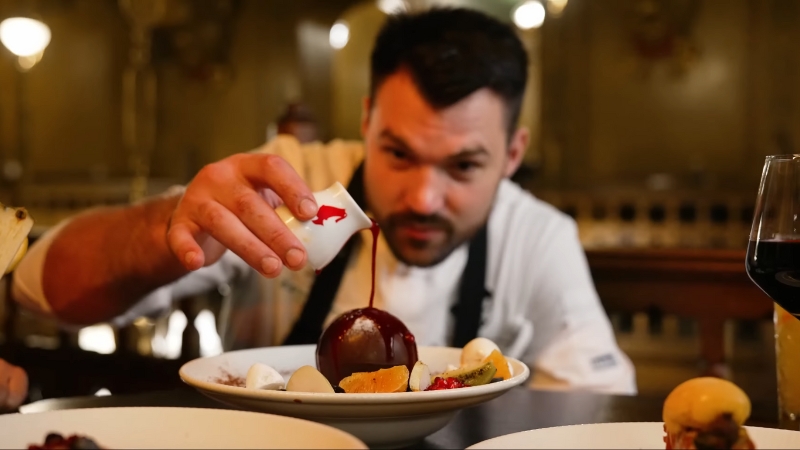
Bucharest’s culinary scene reflects layers of history, regional habits, and social traditions shaped over centuries.
Romanian cooking leans heavily on meat-forward recipes shaped by Balkan, Turkish, and Austro-Hungarian influences, resulting in bold flavors and hearty portions.
For travelers interested in traditional flavors, these establishments consistently appear on lists of the top restaurants in town, offering reliable quality rooted in Romanian culinary heritage.
Classic dishes worth seeking out include sarmale made with cabbage leaves and slow-cooked fillings, ciorbă de burtă with its creamy and tangy profile, mici grilled over open flames, mămăligă served as a comforting staple, and papanasi finished with sour cream and jam.
Street food culture also plays a visible role, with covrigi sold at bakeries, kürtőskalács prepared on rotating grills, and gogoși enjoyed as casual sweets.
Near the close of any visit, food lovers often realize how effectively Top Restaurants in Town captures Bucharest’s traditional dining scene.
Restaurant
Address
Known For
Caru’ cu Bere
Strada Stavropoleos 5, 030081 Bucharest
House-brewed beer using the original 1879 recipe
Hanu’ lui Manuc
Str. Franceză 62-64, 030106 Bucharest
Historic inn dining and courtyard seating
Vatra
Strada Ion Brezoianu 19, 010131 Bucharest
Home-style Romanian comfort food
Lacrimi și Sfinți
Strada Șepcari 16, 030167 Bucharest
Modern Romanian cooking using seasonal ingredients
Zexe & Zahana 33
Bulevardul Aviatorilor 40, 011863 Bucharest
Refined regional Romanian cuisine
Hanul Berarilers
Strada Poenaru Bordea 2, 040092 Bucharest
Grilled meats and Romanian beers
La Zavat
Str. Popa Nan 16, 030167 Bucharest
Seafood prepared simply
1. Caru’ cu Bere
- Address: Strada Stavropoleos 5, 030081 Bucharest, Romania.
- Phone: +40 726 282 373.
- Typical hours: approx. 10:00 AM – 12:00 AM daily.
- Known for house-brewed beer made using the original 1879 recipe.
Caru’ cu Bere has welcomed guests since 1879 and remains one of Bucharest’s most visually striking dining venues.
Neo-Gothic architectural details, ornate woodwork, and colorful stained glass create a dramatic interior that immediately sets expectations for a memorable meal.
Placement in Old Town allows easy access during daytime sightseeing or evening outings.
Dining rooms often feature live traditional music, adding energy and movement to the setting without overpowering conversation.
Signature plates include sarmale served with mămăligă, cozonac baked following classic methods, and substantial meat dishes designed for sharing.
House-brewed beer pairs naturally with grilled selections and slow-cooked recipes, reinforcing a festive Romanian atmosphere throughout the space.
2. Hanu’ lui Manuc
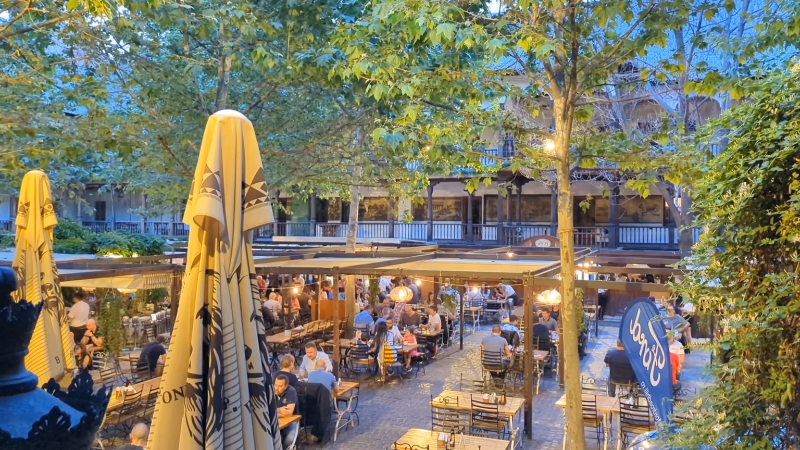
Hanu’ lui Manuc began operations in 1808 and continues to function as both a cultural meeting point and a restaurant.
A large interior courtyard supports relaxed outdoor dining during warmer months, offering a quieter alternative to nearby streets.
Menus focus on classic Romanian preparations such as stews, soups, and grilled meats served in generous portions.
Decorative elements reflect 19th-century Wallachian style, including wooden balconies, arches, and traditional furnishings.
Dining here often feels ceremonial, especially during evenings when the courtyard fills with conversation and shared meals.
What connects these venues is not trend-driven appeal, but their shared reputation as top restaurants in town where local dishes are prepared with consistency and respect for tradition.
3. Vatra
View this post on Instagram
Vatra focuses on comfort cooking presented in a warm and informal setting.
Interiors reference rural households through wooden furniture, folk motifs, and simple table arrangements that place attention on food rather than presentation.
Menu selections concentrate on familiar staples prepared consistently and without excess.
Sarmale arrive well-seasoned, mici carry balanced spice levels, and ciorbă de fasole cu afumătură delivers deep flavor suited for colder days.
Simplicity defines the experience, making Vatra a dependable choice for diners seeking honest Romanian meals prepared with care.
4. Lacrimi și Sfinți
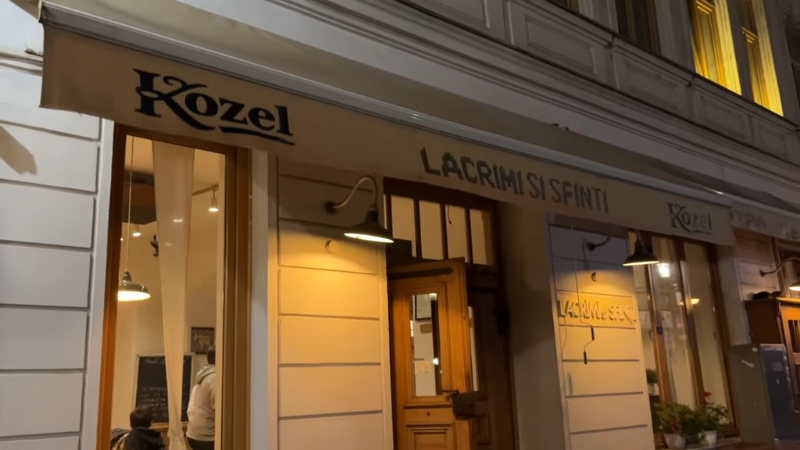
Lacrimi și Sfinți approaches Romanian cuisine through modern techniques while maintaining respect for tradition. Ingredient selection follows seasonal availability, allowing menus to shift naturally throughout the year.
Reworked versions of boeuf salad and cozonac appear in unexpected shapes and textures without losing familiar flavors.
Interior design supports a clean, modern mood that contrasts with historical references found on the plate.
Dining here suits guests interested in innovation grounded in national cooking practices.
5. Zexe and Zahana 33
Zexe, alongside Zahana 33, offers a polished interpretation of Romanian gastronomy. Menus feature rare regional recipes alongside aristocratic dishes that rarely appear in casual settings.
Pastramă de oaie receives careful preparation, while galuste cu prune close meals with traditional sweetness and balance.
Elegant interiors, attentive service, and thoughtful pacing support a composed dining experience suited for guests seeking sophistication rooted in national cuisine.
6. Hanul Berarilor
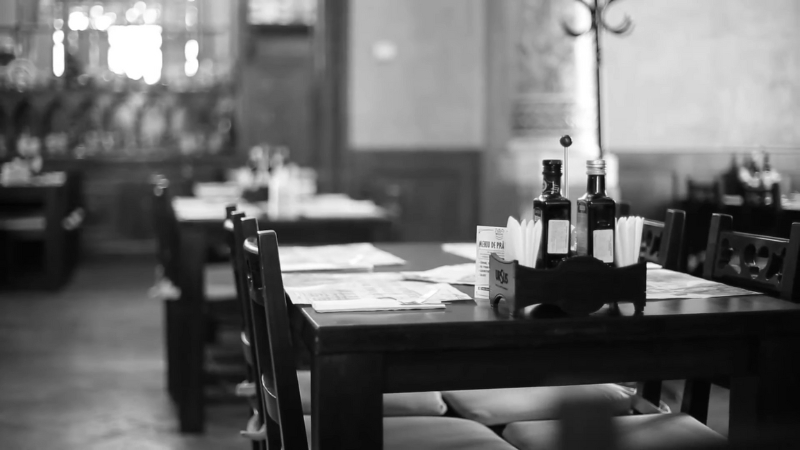
Hanul Berarilor operates as a traditional beer hall decorated with Romanian motifs, wooden beams, and spacious seating areas.
Locations function inside historic villas that include indoor dining rooms and open courtyards.
Large portions encourage shared ordering, especially among groups.
Grilled specialties pair naturally with local beers, supporting long meals centered on conversation and relaxed pacing. Atmosphere remains lively without feeling rushed, making the venue suitable for extended gatherings.
7. La Zavat
View this post on Instagram
La Zavat centers attention on seafood within a traditional tavern format, a less common focus in Bucharest.
Decor remains simple, allowing food quality to lead the experience.
Fresh fish prepared on grills or pans arrives alongside Romanian-style sides such as vegetables, potatoes, and sauces.
Local clientele often return for consistent flavors and unpretentious service, reinforcing the tavern’s reputation as a dependable neighborhood dining option.
What to Pair with Your Meal
Drink selections across traditional Romanian restaurants commonly include țuică, a plum brandy served as a strong opener before meals.
Romanian wines also play an important role, with Fetească Neagră frequently chosen for its bold structure and compatibility with grilled meats and slow-cooked dishes.
Regional craft beers remain popular as well, especially alongside sausages, roasted pork, and hearty stews.
Starters and side dishes add balance and contrast to main courses.
Zacuscă made with roasted vegetables often arrives with fresh bread, while salată de vinete offers a smooth eggplant spread finished with oil and onion.
Pickled vegetables such as cucumbers, cabbage, or peppers introduce acidity that complements heavier plates.
Dessert menus typically close meals on a comforting note. Papanasi appear warm and crisp, topped generously with sour cream and fruit jam.
Cozonac slices provide a soft, sweet option filled with nuts or cocoa, while clătite cu dulceață arrive thin and folded, finished with traditional fruit preserves.
Summary
Bucharest functions as a gastronomic destination shaped by history and everyday tradition.
Dining options range between grand beer halls rooted in the past and modern kitchens reshaping familiar recipes.
Taken together, these dining rooms illustrate why Bucharest continues to be recognized for its top restaurants in town, blending history, comfort, and regional cooking into memorable meals.
Visitors gain access to authentic Romanian dishes served in refined dining rooms or relaxed taverns, each setting reflecting the heart of local cuisine.