

A supper club sits somewhere between a dinner party and a restaurant.
Guests pay. You cook. The setting stays domestic, but the expectations do not.
That gap is where most home supper clubs run into trouble. Cooking for eight friends is a skill you already have. Cooking for eight strangers who have paid to be there, on a fixed time, with courses that need to land together, is a different job entirely.
The work divides into four areas: the legal question, the menu design, the physical setup, and the service itself. Handle those and the cooking part turns out to be the easy half.
Understand the Legal Position First
This is the step people skip, and it is the one that can end the whole project.
Rules vary enormously by country, state, and city. Some jurisdictions have cottage food laws that permit limited home food sales. Others require a licensed commercial kitchen for any paid food service, full stop. Many draw a line between a donation-based private gathering and a ticketed public event, and that line matters more than the size of the guest list.
Call your local health department before you do anything else. Ask specifically about home-based food service, private dining, and whether a permit exists for what you are describing. Ask about liability insurance requirements while you have them on the phone.
Some hosts sidestep the issue by keeping the event genuinely private, invitation-only, with contributions rather than ticket sales. Others rent a commissary kitchen for prep and host the meal at home. Both are common. Neither works everywhere.
Design a Menu That Survives Service
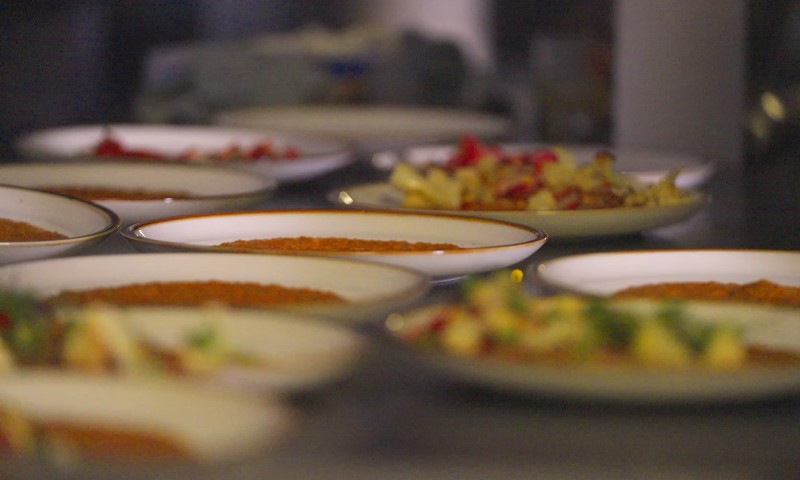
Home cooks design menus around what they want to cook. Supper club menus have to be designed around what can be executed for a full table at once.
Build Backward from Plating
Start with the moment the plate leaves the kitchen and work backward. If a dish needs three components finished simultaneously, plated hot, and served within two minutes, ask whether you can do that eight or twelve times in a row while also managing the next course.
The dishes that work are the ones with front-loaded labor. Braises, roasts, terrines, anything that gets better sitting. The dishes that fail are the ones requiring last-second execution per plate.
Limit the Course Count Honestly
Four courses executed cleanly beats seven courses executed frantically. First-time hosts almost always overshoot, then spend the entire evening in the kitchen while the guests they invited sit alone in the dining room.
A practical structure for a first event:
- A cold or room-temperature starter plated before guests arrive
- A main built around something that holds, finished in the oven rather than on the pass
- A dessert made entirely the day before
That is three courses, and two of them require zero work during service. It sounds conservative. It is the difference between hosting a dinner and hiding from one.
Handle Dietary Requirements at Booking
Ask about allergies and restrictions when people reserve, not when they sit down. Then design one alternate path rather than improvising per guest. A vegetarian version of the main that was planned in advance is a dish. A vegetarian version invented at seven o’clock is a plate of vegetables.
Outfit the Space for Repeat Service
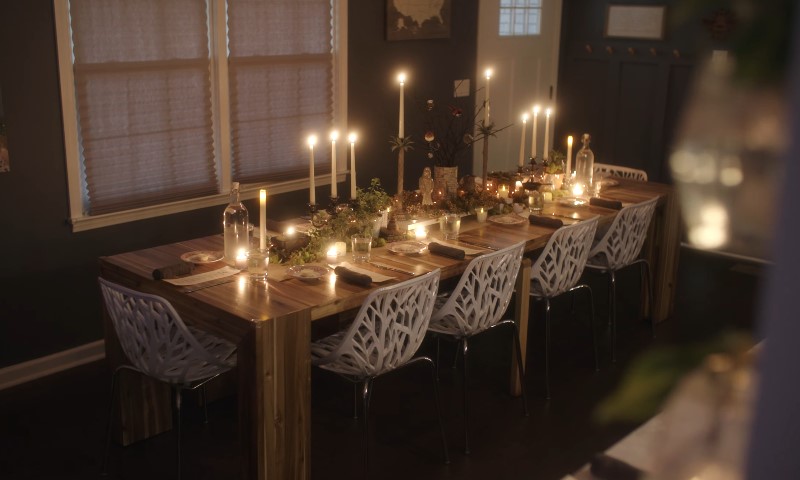
Here is where a supper club stops resembling a dinner party.
Your dining chairs were built for a family of four using them at dinner. A supper club puts twelve strangers in them twice a month, some of whom will lean back, some of whom will drag rather than lift, all of whom will spill something eventually. Residential furniture is engineered for a fraction of that cycle count, and it shows within a season.
What Actually Fails
Chair joints loosen first, particularly on the back-to-seat connection where leaning back applies leverage. Fabric seats absorb wine and oil and never fully release either. Table finishes mark from hot dishes and repeated wiping.
None of this is dramatic on any single night. It accumulates, and it accumulates faster than most hosts expect.
The Sourcing Problem
View this post on Instagram
The practical difficulty is that home furniture retailers do not stock what you need. Their product is built for residential duty cycles, and the specifications that matter for repeat service, such as frame construction, weight rating, and wipeable surfaces, are rarely published because residential buyers do not ask.
Commercial suppliers publish exactly those specifications, because their buyers are restaurants who need to know. This is why most supper club hosts eventually order restaurant furniture online rather than buying another set of dining chairs.
The chairs arrive with a stated weight capacity and a frame built for daily commercial use, the tables come with surfaces designed to be wiped down repeatedly, and the pricing at quantity tends to compare favorably with mid-range residential furniture that will not last as long under the same use.
Two practical considerations when you go that route. Stackability matters if the room has another purpose between events, since twelve chairs that do not stack become a storage problem immediately. And measure the seat height against your table height before ordering, because commercial tables and residential tables are not built to the same standard dimensions.
The Rest of the Setup
Beyond seating, the items that separate a smooth service from a chaotic one are unglamorous. Enough matching plates for every course without washing mid-meal. A holding surface near the dining room so plated food does not travel from the stove. Adequate glassware, since running out of wine glasses at course two means washing during service.
Count everything against your maximum guest number, then add two. Something breaks.
Run the Service

The evening itself has a rhythm that only becomes obvious after the first one.
Prep as much as possible the day before, and write a timeline with clock times rather than durations. “Roast goes in at 6:40” is usable during service. “Roast takes ninety minutes” requires arithmetic while you are also greeting guests.
Decide in advance whether you are cooking or hosting, because you cannot fully do both. Most successful supper clubs bring in one person to handle serving and clearing, even if that person is a friend paid in dinner. The host who plates every course and also clears every plate is a host nobody talks to all night.
Set expectations in the booking confirmation. Arrival time, approximate end time, whether alcohol is provided or brought, and what the space actually is. Guests who know they are coming to a home dining room have a good evening. Guests expecting a restaurant do not.
Price It So It Works
Most first-time hosts underprice badly, because they count ingredients and nothing else.
The real cost includes ingredients, the portion of your equipment and furniture that this event consumed, any permit or insurance cost spread across the year, help you paid for, and your own time. That last one gets valued at zero almost universally, which is how a supper club turns into an expensive hobby that feels like a job.
Work out a per-guest number that covers all of it, then check it against what comparable dining in your area costs. If the number is uncomfortable, the fix is usually fewer covers at a higher price rather than more covers at a lower one, since every additional guest adds cost and stress simultaneously.
Summary
A supper club works when the ambition of the food matches the reality of the space and the equipment, which is why supper clubs became popular in Dubai.
The parts that trip people up are rarely culinary. They are the permit nobody checked, the menu that could not be executed for twelve at once, the chairs that were never built for this, and the pricing that ignored everything except groceries.
Start smaller than feels satisfying. Get one clean service under your belt with a menu that mostly cooks itself, in a room set up to handle the load, and then expand. The cooking is the part you already know how to do. Everything around it is what turns a good dinner into something you can actually repeat.